Jonathan Kozol - The Shame of the Nation Blog Post #1
As I began reading this book, a few things became very clear to me. The first: My experience surrounding public education is very different than what most high school students get. The second: Our country seems to have been taking steps backward when it comes to public schools, and mostly in the inner cities. Kozol captures this excellently by using anecdotes to make the reader truly understand the magnitude of the problem.
On the first page, he introduces a new character, a girl, named Pineapple. He describes her as a "plump and bright-eyed child who had captured my attention when I leaned over her desk and noticed that she wrote her letters in reverse."(Kozol 13)
By describing this girl as happy and charmingly misguided, he sets the reader's expectations high. However, the next few lines subvert them entirely. He describes his next visit to Pineapple's high school, in the spring of 1997, as follows:
The school was in a state of chaos because there had been a massive turnover of teachers. Of 50 members of the faculty in the preceding year, 28 had never taught before; and half of them were fired or did not return the following year. Very little teaching took place in Pineapple's class during the time that I was there.( Kozol 13, 14)Through his description of the school's dire state, Kozol sets the stage for his investigation into how much the public school system of America has deteriorated over the past 40 years, leading to overcrowded schools that barely have any competent staff and are almost completely segregated based on race.
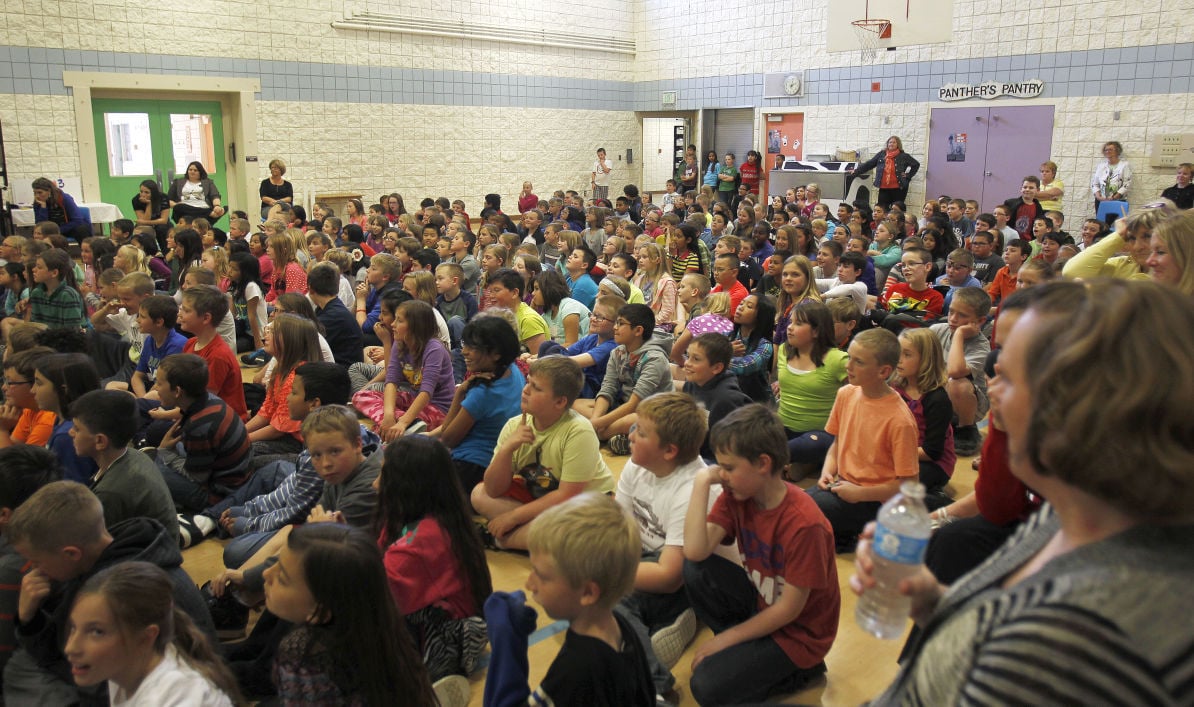 |
| Schoolchildren listening to instruction at I.B. Perrine Elementary in April 2015 in Twin Falls, Idaho. |
That leads me into my next point of interest; I particularly thought that his repeated citing of statistics helped bolster his argument that segregation is simply returning to our public school system.
He shows this best, in ironic fashion, examining the makeup of schools named for Martin Luther King or Rosa Parks. He states that "In Los Angeles, there is a school that bears the name of Dr. King [that is] 99 percent black and Hispanic, and another in Milwaukee where black children also make up 99 percent of the enrollment."(Kozol 24). He goes on to mention a school "in Cleveland named for Dr. King in which black students make up 99 percent of the student body"(Kozol 24) and "a middle school named for Dr. King in Boston, [where] black and Hispanic children make up 98 percent of the enrollment"(Kozol 24).
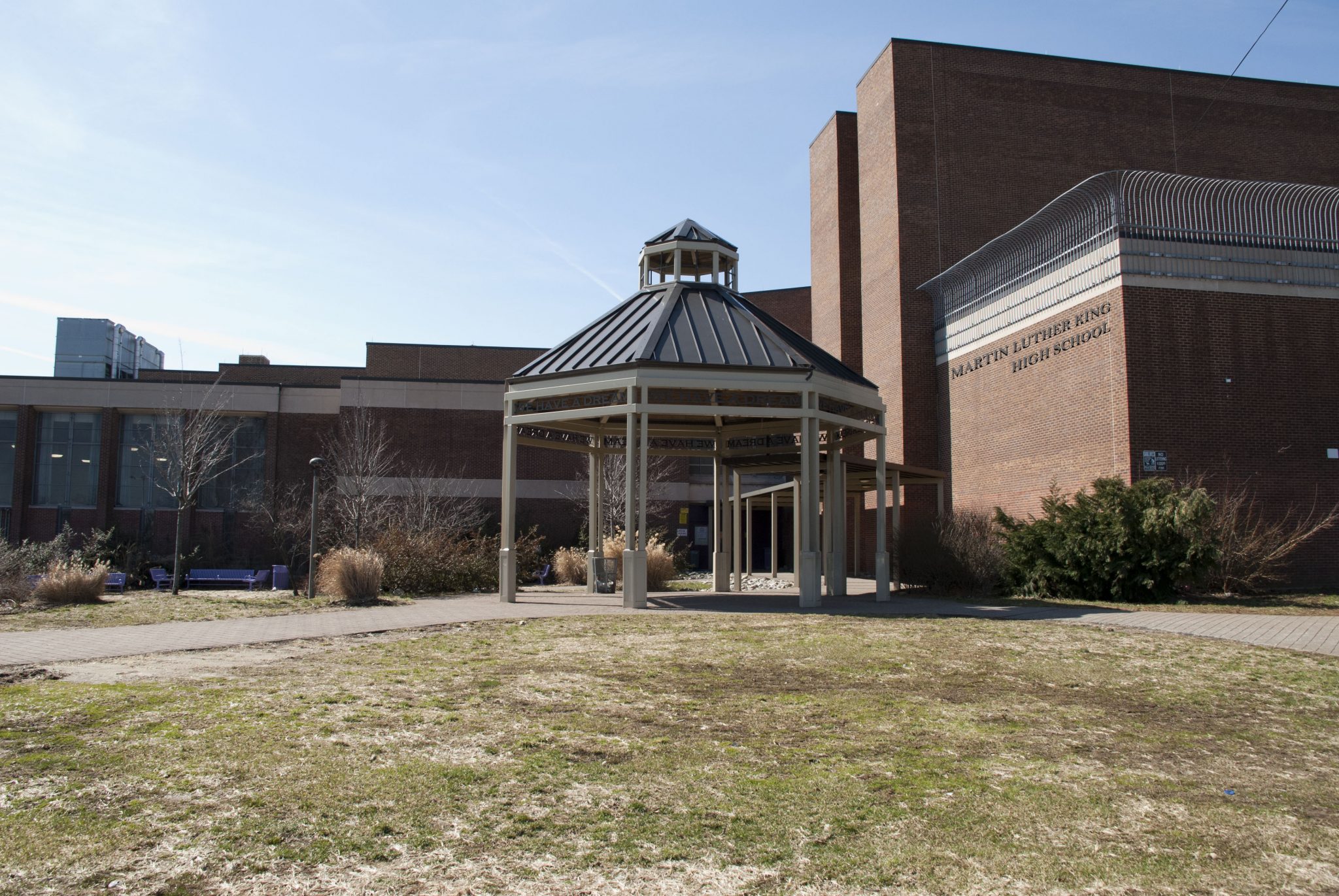 |
| Martin Luther King High School, Philadelphia, PA |
I think that Kozol does a fantastic job to point out the painful irony of this situation, because the leaders those schools were named after worked for so long and so hard to gain equal rights, only to see their names put on schools that remain segregated to this day. I believe this part of Kozol's narrative really drives the point home that our public schools are still segregated. It can be hard to accept that fact, but once you do, it makes this book much easier to appreciate.
And that is the most important takeaway from this first section of reading, that our schools remain segregated, no matter how much we try to ignore that fact.
Works Cited
Kozol, Jonathan. The Shame of the Nation: The Restoration of Apartheid Schoolingin America. New York, Broadway Paperbacks, 2006.
Elementary in April 2015 in Twin Falls. Magicvalley.com, Times News,
magicvalley.com/blogs/assignment/blog-will-your-child-s-school-be-overcrowded/
article_8f9c26e6-09d9-5650-8410-a99b39ab2340.html. Accessed 4 Mar. 2020.
mlkhs.philasd.org. Accessed 4 Mar. 2020.
Spencer, I appreciate your self-reflection about how different your education has been. It would have been nice to see that play out throughout the post, perhaps in a comparison of Pineapple's situation with your own.
ReplyDeleteWhat else in the reading did you find surprising or interesting?
Spencer, I completely agree with your sentiment that we have a vastly different education experience than not only the students in the novel, but most kids across the country, regardless of color. While we have been blessed with modern facilities, a more-than-adequate teaching staff, and ample opportunities such as field trips, leadership seminars, and school-organized extracurriculars, I believe that we are at a slight disadvantage by not having more diversity within our school district as a whole. Do you think your views about segregation within schools, and race as a whole, would be different if there were more students of color in Hopkinton?
ReplyDelete